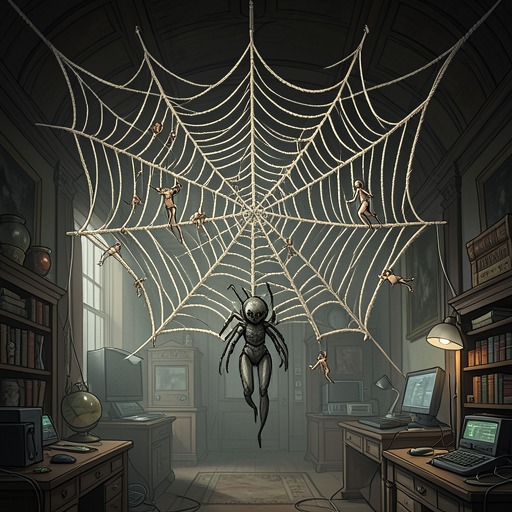
Spider woman
Kiss of the Spider WomanSpider woman is a mysterious masked figure in the film Molina recounts near the end of the novel. Her body seems to generate the web that traps her, and her enigmatic tear unsettles Molina’s wish to explain everything. When the jungle story gives way to a dream in which she directs him toward food, the image connects confinement and strangeness with nourishment and rest.
Appearance and Entrapment
The film is in black and white. In its jungle, soft maracas and drums accompany the arrival of a strange woman under a strong spotlight. Her long, shining dress fits closely to her body, and a silver mask conceals her face. She is caught in a spider’s web, but the image resists the idea that the web is simply around her: its threads appear to grow from her own body, emerging at her waist and hips. They are numerous, rope-like, and hairy, yet Molina imagines they might feel smooth to the touch. The contrast between that possible softness and his revulsion makes her body both alluring and disturbing.
The woman cannot move. She appears to cry, though Molina revises the description: she is smiling, while a tear slips from beneath the mask and shines like a diamond. The changing account leaves her expression unsettled rather than resolving it. The figure is presented through Molina’s fascinated, uncertain description; the film supplies no clear view of her face or explanation of her condition.
The Unexplained Tear
Molina asks the masked woman why she is crying. In the film’s final close-up, she answers that this is something that can never be known. Molina accepts the ending as enigmatic, but begins to offer an explanation for what it signifies. Before he can finish, the woman interrupts: he is trying to explain everything, she says, when he is really speaking from hunger and lacks the courage to admit it.
The exchange makes the scene turn on the limit of interpretation. Molina wants the tear to carry a decipherable meaning; the woman’s answer leaves it unknowable, and her interruption redirects attention from symbolism to a bodily need. The scene does not confirm a single explanation for her sadness. Instead, it preserves the tension between the glittering image and the plain possibility that Molina is hungry.
From Film Image to Dream
As the narration continues, the Spider woman points Molina along a path through the forest. He finds abundant food: roast chicken, crackers with large pieces of fresh cheese, rolled slices of cooked ham, glazed pumpkin, and as much guava paste as he wants. The movement from her trapped body to her practical gesture changes the image’s immediate function. She remains strange and unsettling, but she also guides Molina toward nourishment.
Molina then grows sleepy after eating. The surrounding conversation turns toward Marta and the reassurance that they can remain together in thought, even while apart. The Spider woman’s direction through the forest belongs to the dreamlike continuation of the film narration; the exchange about their lasting connection is with Marta, not evidence that the masked figure herself speaks those words. The sequence lets the film image merge with hunger, food, and sleep without fully explaining the transition.
Narrative Significance
Spider woman’s scene brings together the novel’s imaginative storytelling and the material conditions of the speaker’s experience. The silver mask, bodily web, and unanswered tear give Molina an image that invites interpretation, while the interruption exposes hunger beneath his effort to make the image mean something. Her later role as guide carries that recognition into action: she directs him to food, and eating gives way to sleep.
The figure therefore remains deliberately double. She is at once an imprisoned, inaccessible presence and the guide who leads Molina out of immediate want. The story does not resolve the tear into a definite cause or turn the woman into a fully explained character. Its force lies in the passage from spectacle to need, and in the way an enigmatic film image opens into a dream of companionship and rest.